
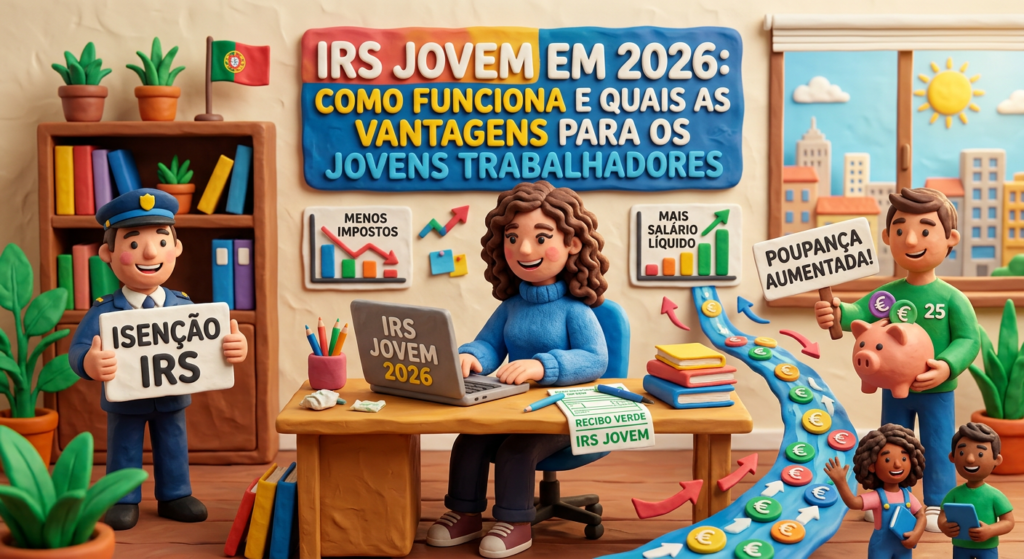
In September, many young people return to their studies, start new jobs, or continue building the early stages of their professional careers. In this context, the Youth IRS remains one of the most important tax measures designed to support young people entering the labour market and increase their disposable income.
At FA ACCOUNTING, we find that there are still many questions about who is eligible for the Youth IRS, what benefits apply in 2026, and how to make the most of this tax regime.
In this article, we explain in simple terms how the Youth IRS works and the key aspects that deserve special attention.
What Is the Youth IRS?
The Youth IRS is a tax regime created to reduce the tax burden of young people beginning their professional activity, allowing them to benefit from a partial exemption on employment income.
The purpose of this measure is to promote financial independence, encourage professional qualification, and help retain talent in Portugal.
Who Can Benefit from the Youth IRS?
In 2026, the regime applies to young individuals who earn income within the following categories:
- Employment income (Category A);
- Self-employment income (Category B).
To benefit from the regime, it is important to verify compliance with the legal requirements in force and ensure that income is properly declared in the annual tax return.
What Are the Main Benefits?
The main advantage of the Youth IRS is the reduction of tax payable through a partial exemption on earned income.
The most significant benefits include:
- Higher monthly net income;
- Reduced tax burden during the first years of employment;
- Greater savings capacity;
- Support for financial independence;
- Encouragement for career development.
For many young workers, this measure can represent substantial tax savings during their first years of professional life.
Why Is It Important to Understand the Youth IRS Rules?
Despite its advantages, it is essential to understand the eligibility requirements and limitations applicable to the regime.
Some situations that may require a specialised review include:
- Changing employers;
- Receiving income from multiple sources;
- Starting a self-employed activity;
- Changes in tax or family circumstances;
- Transitioning between different tax regimes.
An early review can help prevent filing errors and ensure that all available benefits are fully utilised.
The Youth IRS and Financial Planning
September is an excellent time for young workers to review their tax and financial situation.
The savings generated through the Youth IRS can be used to:
- Build an emergency fund;
- Invest in professional training;
- Prepare for purchasing a home;
- Strengthen savings and investment products;
- Improve long-term financial stability.
Proper management of this benefit can contribute to achieving more ambitious financial goals in the future.
Common Mistakes to Avoid
In practice, some taxpayers lose part of the Youth IRS benefits due to situations such as:
- Lack of awareness of eligibility requirements;
- Failure to update tax information;
- Errors when completing the annual tax return;
- Incorrect interpretation of applicable rules;
- Lack of specialised professional support.
For this reason, it is advisable to analyse each case individually to ensure the correct tax treatment.
How Can FA ACCOUNTING Help?
At FA ACCOUNTING, we support young workers, self-employed professionals, and families through:
- Eligibility assessment for the Youth IRS;
- Support in meeting tax obligations;
- Personalised tax planning;
- Tax impact simulations;
- Ongoing tax advisory services.
Make the Most of the Youth IRS Benefits with Confidence
📞 Contact us to review your situation and ensure that you are taking full advantage of the tax benefits available through the Youth IRS.
Disclaimer: This article is for informational purposes only and does not replace specialised tax or professional advice. The application of the Youth IRS depends on the legislation in force and the specific circumstances of each taxpayer.
Did you enjoy this article? Share it with students, recent graduates, and young professionals who may benefit from this important tax incentive.