
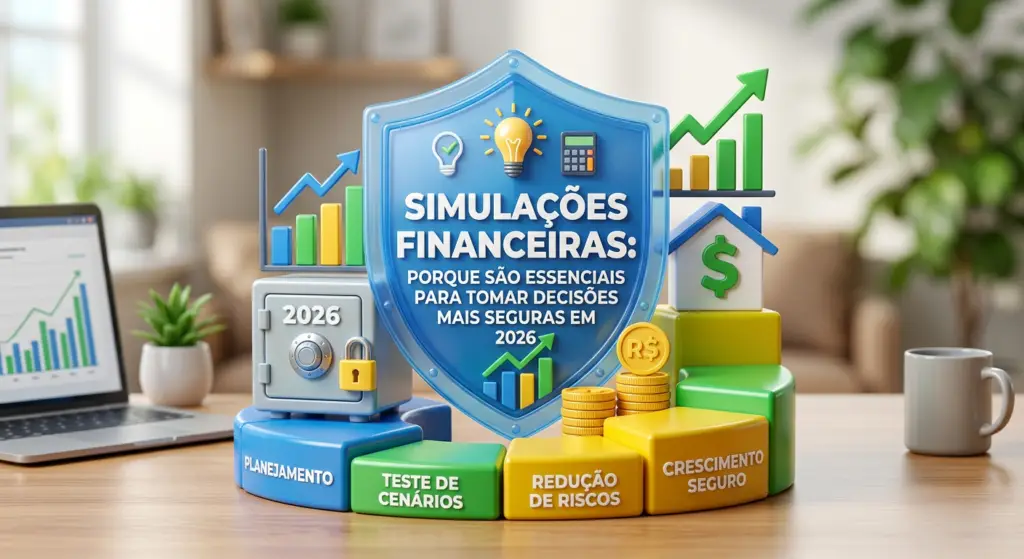
In a constantly changing economic environment, making financial decisions without first assessing their impact can represent significant risks for individuals, self-employed professionals, and businesses. Financial simulations are becoming increasingly important, enabling the anticipation of scenarios, the analysis of opportunities, and the preparation of more effective strategies for the future. In October 2026, with the approach of the fiscal year-end and planning for 2027, this is a particularly appropriate time to conduct simulations that support informed and sustainable decision-making. At FA ACCOUNTING, we help our clients use financial simulation tools to better understand the impact of their choices and achieve their goals with greater confidence. In this article, we explain what financial simulations are, their benefits, and how they can be applied in different situations.
What Are Financial Simulations?
Financial simulations consist of the advance analysis of different economic and financial scenarios, allowing the prediction of the impact of specific decisions before they are implemented.
Through simulations, it is possible to:
- Evaluate the costs and benefits of a decision;
- Project future income and expenses;
- Assess the feasibility of investments;
- Anticipate cash flow needs;
- Compare different financial strategies.
This approach helps reduce uncertainty and improve the quality of decision-making, both on a personal and business level.
Why Conduct Financial Simulations in October?
October represents a strategic period to review goals established at the beginning of the year and prepare for the next financial year. At this stage, many decisions can still be adjusted to positively impact future results.
A financial simulation allows you to evaluate:
- Your current financial situation;
- Forecasts for the coming months;
- The tax implications of certain decisions;
- Financing requirements;
- Financial objectives for 2027.
Anticipating scenarios helps avoid impulsive decisions and prepares more effective actions to face future challenges.
Financial Simulations for Individuals
Individuals can benefit from financial simulations in various everyday situations, including:
- Purchasing a home;
- Taking out personal or car loans;
- Retirement planning;
- Managing household budgets;
- Evaluating investments and savings.
By understanding the financial impact of decisions in advance, it becomes easier to make balanced choices that are aligned with available income.
Simulations for Self-Employed Professionals
Self-employed professionals often face variable income and challenges related to financial planning. Simulations make it possible to:
- Project future revenues;
- Analyze tax and social security obligations;
- Plan investments in the business activity;
- Assess the financial sustainability of the business;
- Prepare for periods of lower turnover.
An advanced view of different scenarios contributes to greater stability and financial control.
Financial Simulations for Businesses
For businesses, financial simulations are essential tools for supporting both strategic and operational management.
The most common analyses include:
- Cash flow forecasts;
- Project profitability assessments;
- Investment planning;
- Sales and growth projections;
- Analysis of the impact of new financing arrangements.
By anticipating different scenarios, managers can make more informed decisions and reduce risks associated with business operations.
Main Benefits of Financial Simulations
Conducting simulations offers several advantages:
- Greater financial predictability;
- Improved risk management;
- Data-driven decision-making;
- Early identification of financial difficulties;
- Greater confidence when making investments;
- More efficient planning for future goals.
The more detailed the analysis, the greater the ability to prepare appropriate responses to different economic scenarios.
Common Mistakes Financial Simulations Help Prevent
Many financial difficulties result from poor planning or decisions made without prior analysis. Simulations help prevent situations such as:
- Underestimating future costs;
- Excessive indebtedness;
- Investments lacking financial viability;
- Insufficient liquidity to meet obligations;
- Setting unrealistic goals.
By anticipating possible outcomes, it becomes easier to adjust strategies before significant problems arise.
How Can FA ACCOUNTING Help?
At FA ACCOUNTING, we support individuals, self-employed professionals, and businesses through:
- Customized financial simulations;
- Investment feasibility analysis;
- Financial and tax planning;
- Cash flow and profitability projections;
- Strategic decision-making support.
Our goal is to provide clear and reliable information that enables clients to act with greater confidence, reduce risks, and make the most of available opportunities.
Prepare Tomorrow’s Decisions Today
📞 Contact us to carry out financial simulations tailored to your reality and discover how proactive planning can help you protect your resources, achieve your goals, and prepare for 2027 with greater confidence and peace of mind.
Note: This article is for informational purposes only and does not replace specialized accounting, financial, tax, or technical advice.
Did you enjoy this article? Share it with family members, friends, professionals, and business owners who want to make more informed decisions through financial simulations and proper future planning.